Column · @landendmsc613
Small Houses, Big Heart: The Emotional Advantages of Intimate Elderly Care
Business Name: BeeHive Homes of Bernalillo
Address: 200 Sheriff's Posse Rd, Bernalillo, NM 87004
Phone: (505) 221-6400
BeeHive Homes of Bernalillo
Beehive Homes assisted living care is ideal for those who value their independence but require help with some of the activities of daily living. Residents enjoy 24-hour support, private bedrooms with baths, medication monitoring, home-cooked meals, housekeeping and laundry services, social activities and outings, and daily physical and mental exercise opportunities. Beehive Homes memory care services accommodates the growing number of seniors affected by memory loss and dementia. Beehive Homes offers respite (short-term) care for your loved one should the need arise. Whether help is needed after a surgery or illness, for vacation coverage, or just a break from the routine, respite care provides you peace of mind for any length of stay.
200 Sheriff's Posse Rd, Bernalillo, NM 87004
Business Hours
The longer I operate in senior care, the more persuaded I am that scale quietly forms whatever. Not just staffing ratios and budget plans, however how it feels to awaken in the morning, who notifications when you seem a bit off, and whether anyone remembers how you like your tea.
Large assisted living buildings and nursing homes have their location. They offer medical coverage, activities, transportation, and a complacency that many families genuinely need. Yet, when I think about the most tranquil and deeply human moments I have seen in elderly care, they hardly ever occur in a 100‑bed facility. They take place in small homes, at kitchen area tables, on shaded patios, in familiar armchairs that have actually moved along with their owner.
Intimate care settings are not magic, and they are not perfect. However they typically open psychological benefits that are hard to replicate at scale. Understanding those benefits assists households make more thoughtful choices, whether they are thinking about assisted living, respite care, or long‑term residential options.
What "small home" care truly means
People use various terms: residential care home, board‑and‑care, micro‑community, small group home. The regulations vary from state to state and nation to nation, however the standard idea corresponds. Instead of a large institutional building with long corridors and a central dining hall, you have a home or home‑like setting where a small number of older grownups live together.
Typical functions include:
- A limited number of citizens, typically in between 4 and 12.
- Shared common areas that appear like a regular home instead of a facility.
- Fewer layers of personnel hierarchy, so caretakers, residents, and families know each other personally.
- More flexible everyday regimens that can adjust to individual preferences.
In real practice, the psychological tone of a small home depends far more on management, staff culture, and the physical environment than on any licensing category. I have actually strolled into 6‑bed homes that felt cold and transactional, and I have met teams in 80‑resident assisted living neighborhoods who handled to produce amazing warmth in spite of the scale.
Still, when you diminish the environment and streamline the structure, particular psychological benefits end up being simpler to achieve.
The emotional landscape of late life
By the time a family starts seriously exploring senior care, a lot has actually currently taken place. Health modifications, hospitalizations, slow losses of capability, moves away from a long‑time community, the death of pals or a spouse. On top of that, major choices have to be made about safety, financial resources, and long‑term planning.
Underneath the logistics, several psychological needs keep appearing:
- To feel seen as a whole individual, with a history that still matters.
- To retain some control over life, even when help is needed.
- To experience stability and predictability, particularly if memory is fragile.
- To feel connected to a couple of trusted people, not perpetually surrounded by strangers.
- To protect self-respect in really intimate situations, like bathing or toileting.
Any senior care setting that takes these needs seriously is currently ahead. Small homes simply have a simpler time translating those concepts into day-to-day practice.
Why small environments relieve the nervous system
Watch someone with moderate dementia walk into a hectic lobby filled with individuals, televisions, and continuous movement, then see the very same person enter a quiet living room with 2 residents checking out and a caretaker folding laundry. The distinction in body language is obvious. Shoulders unwind, scanning eyes settle, speech becomes more fluid.
Chronic overstimulation is a concealed stressor in lots of larger assisted living or memory care communities. Echoing corridors, paging systems, multiple activities in overlapping areas, personnel changes across shifts, unfamiliar float employees from other systems. Older grownups, especially those with cognitive modifications, typically do not have the extra psychological bandwidth to filter all this. When that occurs, we see it as "roaming," "resistance," or "behaviors," however beneath, it can be distress.
Small homes decrease this background noise. Less citizens, fewer staff, less doors and corridors. The brain has less to track. Routines end up being clear. This calmer standard lets other positive emotions surface area: satisfaction, interest, humor, even mischief. I have actually seen homeowners who were described as "difficult" in one setting become mild, cooperative people in a quieter small home, without any medication changes.
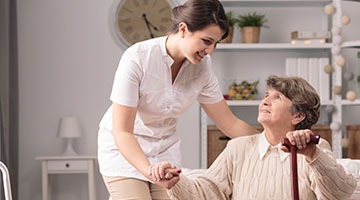
This does not mean small homes are constantly peaceful. There can be laughter at the table, going to grandchildren, a repair individual operating in the yard. The distinction is that the scale remains human. The nerve system can map the environment and feel fairly safe.
Attachment and belonging: knowing "these are my individuals"
Attachment does not end in childhood. In late life, especially after the loss of a spouse or long-lasting pals, the need to come from a small, stable group becomes very strong. When you position someone in a large senior care community, they might engage with dozens of different personnel throughout a week. Some communities handle this well by designating consistent caregivers to specific locals, however turnover and scheduling intricacy still get in the way.
In a small home, locals see the exact same faces day after day. The caretaker who helps with the early morning shower is frequently the one who makes breakfast and sits at the table. The house manager probably understands which grandchild is using to college and which family member lives out of state. Households find out the caretakers' birthdays and ask about their kids by name.
This repeated, low‑key contact constructs real attachment. I keep in mind a woman with advanced dementia, unable to remember her daughter's name, who might still take a look at a specific caretaker and state, "You are my safe individual." That security had actually been made over hundreds of peaceful early mornings: the ideal water temperature level, the additional towel, the gentle touch when she flinched.
When citizens feel they belong to a steady "little world," their stress and anxiety reduces. They are more happy to accept personal care, more available to attempting activities, more flexible of small discomforts. Belonging is among the greatest emotional benefits of intimate elderly care, and it is very hard to fake.
Preserving identity through daily rituals
Loss of self-reliance hurts, however not just in practical methods. Numerous older grownups feel their identity deteriorate with every ability they can no longer securely perform. Driving, cooking, managing medications, gardening, working with tools. When all of this vanishes at once, the psychological effect is enormous.
Small homes senior care are especially well fit to protecting identity through small, meaningful roles. In a huge building, personnel are typically under pressure to "survive the list" of tasks. It seems much faster to do whatever for the resident. In a small home, there is more space to let someone do a bit of what they still can, even if it takes twice as long.
A retired instructor might "assist" a caretaker read the mail and decide what to keep. A former mechanic might be the one who "checks" the batteries on the smoke alarms with a team member. Somebody who constantly baked can sit at the kitchen area table and shape cookie dough while a caregiver handles the oven.
These are not pretend activities. They are connection of self. They advise the resident, and everyone else, that the individual in the reclining chair is more than their medical diagnoses. I have seen depression soften when individuals restore these small functions. They are no longer "a fall threat in Space 203," they are Mary who folds the napkins, George who feeds the cat, Lila who waters the plants.
Emotional security for families, not just residents
Families often carry a heavy blend of regret, grief, and fatigue by the time they think about moving a loved one into assisted living or another senior care setting. Particularly for adult kids who guaranteed "I will never put you in a home," the choice feels like a personal failure, even when 24‑hour care is clearly needed.
Intimate settings can alleviate that psychological concern in numerous ways.
First, interaction tends to be more personal and direct. Instead of an online website and a generic "care team" e-mail, families typically have the telephone number of the primary caretaker or home supervisor. When Dad has a rough night, somebody can text, "He was restless, we tried music, he settled after some tea. No requirement to fret, however desired you to know." These details reassure households that their loved one is not just "managed" however cared about.
Second, visits feel like dropping by a home instead of stepping into an institution. I have actually viewed teenagers who dreaded going to a grandparent in a standard nursing home relax immediately in a small, home‑like environment. They can sit at the kitchen counter, chat with a caretaker, and feel part of every day life. This preserves intergenerational bonds, which is mentally crucial for everyone.
Third, small homes can share the load more flexibly. A daughter who has been supplying round‑the‑clock care might begin with periodic respite care stays, providing herself healing time while her parent gets utilized to the environment. Due to the fact that the setting is small, the staff quickly learn the person's routines, which makes each subsequent stay smoother. Over time, if an irreversible move ends up being essential, it seems like an extension rather than a rupture.
Families who feel mentally safe are much better able to stay involved in a healthy, sustainable way. That benefits the resident, who keeps significant connections, and the staff, who acquire collaborative partners instead of burned‑out, resentful relatives.
Staff experience and how it shapes care
You can not speak about emotional results without discussing staff. Frontline caretakers carry the force of the physical, emotional, and ethical labor in elderly care. Their well‑being straight affects the atmosphere citizens feel every day.
Large assisted living neighborhoods may use more formal profession courses, training programs, and advantages, however they can also feel administrative. Schedules are rigid, interactions are task‑driven, and individual caretakers might not see the long‑term impact of their work.
In a small home, personnel experience is various. Caretakers typically:
- Form long‑term, family‑like relationships with residents and their relatives.
- Have more autonomy to adapt regimens to resident preferences.
- See the instant psychological effect of their presence, for better or worse.
- Take pride in the "whole home," not just their assigned tasks.
This can be deeply satisfying. I have met staff who stayed in one small home for a years, following residents through the last chapters of their lives with amazing commitment. That connection is uncommon in larger systems.
There are trade‑offs, obviously. Smaller operations might struggle to provide top‑tier pay and advantages. Burnout is still a risk, particularly if staffing is tight or leadership is weak. In a really small team, one poisonous personality can poison the environment quickly. Households ought to not assume that "small" instantly implies "healthy," however when the culture is positive, the emotional ripple effect is remarkable.
When a bigger setting might be better
Intimate care is not always the best answer. There are situations where a bigger assisted living or knowledgeable nursing environment fits better, mentally along with medically.
Residents with extremely complicated medical needs might need 24‑hour certified nursing, on‑site treatment services, specialized clinics, or rapid access to hospital transfers. Some small homes can coordinate this, however many are not geared up for high‑acuity care.
Extremely extroverted homeowners, or those who draw energy from a vast array of social contacts and structured activities, sometimes prosper in a bigger community. They like multiple clubs, huge events, and a more busy atmosphere. For them, an extremely small setting may feel limiting or even lonely.
Families who live far away might prefer a larger company with more robust administrative systems, clear escalation paths, and a corporate structure they can hold responsible. A small, family‑run home without strong governance can wander into poor practices if oversight is weak.
The key is healthy. Emotional benefits originate from alignment in between the person's personality, needs, and the environment's strengths. There is no single "right" model for all older adults.
What to search for in a mentally healthy small home
When families tour senior care options, the focus typically falls on safety functions, staffing ratios, and cost. These matter. However it is similarly essential to examine the emotional environment. In a small home it can be simpler to read, because there are fewer moving parts.
Here are indications that a small home is mentally healthy:
- Residents are engaged in normal life: somebody reading, somebody napping, perhaps somebody folding a towel, instead of everyone parked in front of a television.
- Staff speak with residents respectfully, using names and mild tones, even when homeowners are confused or duplicating questions.
- Personal products and photos are visible, and rooms feel individualized, not staged for marketing.
- The home smells like normal living (food, laundry) rather than strong disinfectant or masking fragrances.
- You notification moments of genuine love: a hand capture, a shared joke, a caregiver who stops briefly to listen instead of hurrying past.
If possible, visit unannounced after the first official tour. The second visit often exposes the "genuine" daily rhythm.
Questions to ask when thinking about intimate elderly care
Families sometimes feel overwhelmed and do not understand how to probe beyond the pamphlet. Focused questions help surface the psychological truth behind the marketing language.
Useful concerns to ask consist of:
- How long have the majority of your caregivers been here, and what do you do to keep great staff?
- Tell me about a resident who was tough to care for initially and how your team got to know them.
- What takes place here on a normal day for somebody like my mother or father, from awakening to bedtime?
- How do you include families, particularly if we can not visit often?
- Can you share a recent circumstance where a resident was upset, and how personnel assisted them feel safe again?
The content of the response matters, but so does the method it is delivered. Are team member stiff and rehearsed, or do they seem reflective and honest? Do they discuss residents with love or inconvenience? Do they consist of the older adult in the conversation where possible, or talk over them?

Integrating small homes with the broader care continuum
Intimate care settings seldom run in seclusion. Frequently, they become part of a more comprehensive sequence: home care, respite care stays, longer residential care, often hospice. The psychological benefit grows when these transitions feel connected instead of fragmented.
Respite care can be particularly powerful. A caretaker who has actually been supporting a partner with dementia at home might utilize a small home for brief stays at first. These breaks permit the caretaker to rest, manage medical visits, or merely recharge. Equally essential, the individual receiving care gradually ends up being acquainted with the environment and the staff.
Over time, as the illness advances, what began as occasional respite care can progress into a full‑time move. Due to the fact that the relationships and regimens are already in location, the emotional shock is lowered. The resident is not entering an unidentified building but going back to a place where "my good friends are."
Coordinated healthcare makes a distinction too. When small homes develop strong connections with local medical care companies, home health, and hospice groups, homeowners experience less disconcerting transitions in and out of hospitals. Staff can get subtle changes early and collaborate with clinicians who currently understand the individual's worths and history. That connection supports dignity at the end of life.
Practical constraints: expense, regulation, and availability
It would be deceitful to go over emotional advantages without acknowledging the useful barriers. Small homes are not equally available, and they are not constantly economical. In numerous regions, they operate as private‑pay assisted living or board‑and‑care, which can put them out of reach for families relying exclusively on public benefits.
Regulatory frameworks in some cases drag reality. Guidelines written for bigger facilities might not adapt well to small homes, or the licensing classification that fits a small home model might not permit higher care needs. Excellent companies work creatively within these restrictions, however they can only bend so far.
Families in some cases have to make tough compromises. I have sat at kitchen tables with children who chose a particular small home mentally however picked a larger setting due to the fact that it accepted a public payer source that the small home might not. In those moments, the work moves to extracting as much intimacy and personalization as possible within the picked environment.
Advocating for policy that supports a larger range of small, community‑based senior care alternatives is not a quick fix, yet it remains essential. The emotional advantages explained here are not luxuries. They are part of humane care in late life, and they must not be booked just for those who can pay leading rates.
Bringing the "small home" state of mind into any setting
Even when a real small home is not an alternative, families and professionals can obtain from the small‑scale technique to enhance the emotional experience in bigger assisted living or nursing environments.
Focus on continuity. Demand constant caregivers when possible. Learn their names, share household stories, and treat them as partners. That relational glue assists everyone.
Personalize the space. Even in a standard room, images, a preferred blanket, a familiar light, or a treasured wall hanging can develop psychological anchors. These objects inform staff who the person is, not just what care they need.
Protect routines. If your father constantly shaved after breakfast, advocate for keeping that order. If your mother prayed or listened to a specific piece of music before bed, share that with personnel. Small routines offer psychological structure.
Slow down key minutes. Bathing, dressing, and mealtimes are emotionally loaded. Motivate caregivers to prevent rushing through them. A few additional minutes of calm, unhurried existence frequently prevent agitation later.
Above all, keep informing the individual's story. In care plan meetings, in hallway chats with staff, in notes you leave at the bedside. Small homes naturally absorb these stories because the scale makes love. In larger settings, households in some cases need to work a bit harder to weave the story into the everyday fabric.
The peaceful power of intimacy
When you remove away marketing terms and care designs, what older adults and their households frequently wish for is simple: to feel comfortable, to be understood, and to be cared for by people who treat them as people, not tasks on a schedule.

Small homes are not a universal service, but they are a vibrant presentation that scale matters. A handful of locals around a table, a caregiver who notifications a brand-new trembling, a relative who feels comfortable enough to sob in the kitchen while somebody makes coffee for them, not just for the resident. These are the moments that shape the emotional memory of late life.
Whether you eventually choose an intimate residential home, a larger assisted living community, or a mix of respite care and in‑home support, keeping these emotional concerns in focus alters the concerns you ask and the details you see. Structures, staffing charts, and service menus are only the skeleton. The small, day-to-day gestures of intimacy supply the heart.
BeeHive Homes of Bernalillo provides assisted living care
BeeHive Homes of Bernalillo provides memory care services
BeeHive Homes of Bernalillo provides respite care services
BeeHive Homes of Bernalillo supports assistance with bathing and grooming
BeeHive Homes of Bernalillo offers private bedrooms with private bathrooms
BeeHive Homes of Bernalillo provides medication monitoring and documentation
BeeHive Homes of Bernalillo serves dietitian-approved meals
BeeHive Homes of Bernalillo provides housekeeping services
BeeHive Homes of Bernalillo provides laundry services
BeeHive Homes of Bernalillo offers community dining and social engagement activities
BeeHive Homes of Bernalillo features life enrichment activities
BeeHive Homes of Bernalillo supports personal care assistance during meals and daily routines
BeeHive Homes of Bernalillo promotes frequent physical and mental exercise opportunities
BeeHive Homes of Bernalillo provides a home-like residential environment
BeeHive Homes of Bernalillo creates customized care plans as residents’ needs change
BeeHive Homes of Bernalillo assesses individual resident care needs
BeeHive Homes of Bernalillo accepts private pay and long-term care insurance
BeeHive Homes of Bernalillo assists qualified veterans with Aid and Attendance benefits
BeeHive Homes of Bernalillo encourages meaningful resident-to-staff relationships
BeeHive Homes of Bernalillo delivers compassionate, attentive senior care focused on dignity and comfort
BeeHive Homes of Bernalillo has a phone number of (505) 221-6400
BeeHive Homes of Bernalillo has an address of 200 Sheriff's Posse Rd, Bernalillo, NM 87004
BeeHive Homes of Bernalillo has a website https://beehivehomes.com/locations/bernalillo/
BeeHive Homes of Bernalillo has Google Maps listing https://maps.app.goo.gl/QSaz3dwMGDj1Ev9a8
BeeHive Homes of Bernalillo has Instagram page https://www.instagram.com/beehivehomesbernalillo/
BeeHive Homes of Bernalillo has an YouTube page https://www.youtube.com/@WelcomeHomeBeeHiveHomes
BeeHive Homes of Bernalillo won Top Assisted Living Homes 2025
BeeHive Homes of Bernalillo earned Best Customer Service Award 2024
BeeHive Homes of Bernalillo placed 1st for Senior Living Communities 2025
People Also Ask about BeeHive Homes of Bernalillo
What is BeeHive Homes of Bernalillo Living monthly room rate?
The rate depends on the level of care that is needed. We do a pre-admission evaluation for each resident to determine the level of care needed. The monthly rate is based on this evaluation. There are no hidden costs or fees
Can residents stay in BeeHive Homes until the end of their life?
Usually yes. There are exceptions, such as when there are safety issues with the resident, or they need 24 hour skilled nursing services
Do we have a nurse on staff?
No, but each BeeHive Home has a consulting Nurse available 24 – 7. if nursing services are needed, a doctor can order home health to come into the home
What are BeeHive Homes’ visiting hours?
Visiting hours are adjusted to accommodate the families and the resident’s needs… just not too early or too late
Do we have couple’s rooms available?
Yes, each home has rooms designed to accommodate couples. Please ask about the availability of these rooms
Where is BeeHive Homes of Bernalillo located?
BeeHive Homes of Bernalillo is conveniently located at 200 Sheriff's Posse Rd, Bernalillo, NM 87004. You can easily find directions on Google Maps or call at (505) 221-6400 Monday through Sunday 9:00am to 5:00pm
How can I contact BeeHive Homes of Bernalillo?
You can contact BeeHive Homes of Bernalillo by phone at: (505) 221-6400, visit their website at https://beehivehomes.com/locations/bernalillo/ or connect on social media via Instagram Facebook or YouTube
Residents may take a trip to the Abuelita's New Mexican Kitchen . Abuelita’s offers comforting New Mexican dishes that assisted living and elderly care residents can enjoy during senior care and respite care dining outings.